Executive Orders & Digital Dollars


Good morning. Today we've got coverage on the White House's plans to regulate crypto, the Fed's report on a digital dollar, tennis in the metaverse, and more!
Bonus Content Coming: I'm targeting early next week the end of the month to have my notes out from Messari's Crypto Theses for 2022. I'll include a link to my notes in this newsletter, however, the full report is definitely worth a read. The report is now in podcast form and can be found here.
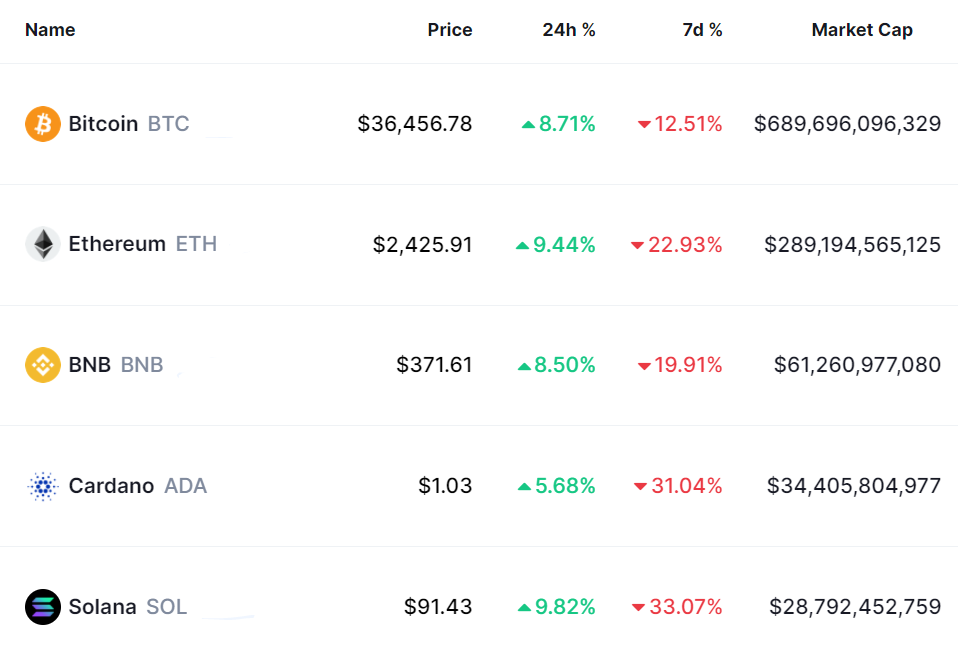
Market Update (as of 8:17am ET):
My asks from you:
- Forward to your friends, family, and anyone that would be interested (check the Top Sharers leaderboard at the bottom of this email to see where you stand!)
- If you're new, hit that pink subscribe button just below this section
- Send any and all feedback to jmaxxyoungii@gmail.com
- Add us to your Contact List so this newsletter doesn't end up in your spam folder
Top 5:
1. Fed releases long-awaited study on a digital dollar but doesn’t take a position yet on creating one
The Fed released its report on a digital dollar last week and essentially took a seat on the fence in the 40-page document. The report highlights some benefits of a central bank digital currency (CBCD) including speed of payments and the ability to provide financial services to those without bank accounts. However, the report itself claims that it “is not intended to advance a specific policy outcome and takes no position on the ultimate desirability of," a digital dollar. Additionally, the Fed said that it will not act without a mandate from Congress.
SSS (sat-sized summary): The Fed finally put out its report on a digital dollar which was originally scheduled for release in the summer of 2021. The delay combined with the punt to Congress for ultimate decision making doesn't do much to advance the conversation in Washington.
2. White House Is Set to Put Itself at Center of U.S. Crypto Policy
In the coming months, the Biden administration will release a government-wide strategy for digital assets. Before finalization, a variety of federal agencies will be required to weigh in with reports on risks and opportunities presented by the new technology. The strategy will be presented in the form of an executive order from the president and will focus on "economic, regulatory and national security challenges posed by cryptocurrencies." While many in the crypto industry have been asking for thoughtful regulation of the space, it remains to be seen what the White House's strategy will look like.
SSS: The Biden administration will release an executive order in the coming months to create a government-wide crypto strategy. The lack of regulatory action thus far and the volatility of crypto markets in general have put pressure on the White House to act. Well-thought out regulation of crypto could have benefits and provide protection for the market, but many are skeptical that the White House has the requisite knowledge and restraint to put those type of laws in place.
3. BlackRock Looks to Enter Crypto ETF Arena With Blockchain Fund
The world's largest asset manager is taking a baby-step into the blockchain and crypto industry by launching an ETF. The iShares Blockchain and Tech ETF would "consist of companies involved in the development and deployment of crypto technologies," and closely track the NYSE FactSet Global Blockchain Technologies Index. BlackRock CEO, Larry Fink, said that he sees "huge opportunities" for digital currency during an October interview with CNBC. The fund will not invest directly in crypto or crypto futures.
SSS: BlackRock, the world's largest asset manager, is planning to launch a blockchain and crypto ETF product. While the fund will not invest directly in crypto, it's a sign that BlackRock's customers are interested in a fund that provides exposure to the industry.
4. Australian Open Metaverse, ‘Art Ball’ NFTs Ace First Week as Tournament Rolls On
The Australian Open's metaverse project in Decentraland is performing almost as well as peak Roger Federer. The virtual recreation of Melbourne Park is drawing in 4,000-5,000 unique users on a daily basis and reported a peak attendance of more than 28,000 users. Some were expecting more from the experience, but given it's the first time an Australian sporting organization has held an event in the metaverse there will certainly be improvements in the future. In parallel to the Decentraland project, the tournament also minted NFTs called "Art Balls" that have generated over $3.9 million in trading volume over the last two weeks.
Watching the #AusOpen on TV is so 2021... this year, it's all about watching it in the metaverse. #9Today pic.twitter.com/DrI5KS509f
— The Today Show (@TheTodayShow) January 21, 2022
SSS: The Australian Open's metaverse project is drawing huge numbers during the annual two-week long tournament. The ability to engage a global audience via virtual experiences is a huge opportunity for sporting events where passionate fans may not have the time or financial means to attend.
5. Binance failed to live up to its anti-money laundering obligations, report says
According to an investigation from Reuters, Binance is operating with "weak customer checks and anti-money laundering (AML) processes, and obscured information about its finances and business structure from regulators." The report was strongly denied by Binance's CEO, Changpeng Zhao. The company, which is the world's largest cryptocurrency exchange and processes around $76 billion worth of crypto trades per day, has no fixed headquarters which has allowed it to operate in a legal gray zone. However, regulatory scrutiny of Binance has increased as the company expanded into new jurisdictions and crypto became mainstream. Red flags include:
- Recruiting customers from high risk money laundering jurisdictions such as Russia and Eastern Europe
- Ignoring internal compliance team warnings that existing know-your-customer checks were insufficient
- Not responding to 44 letters from German authorities that pointed to suspected money-laundering on the platform
While illicit activity in the crypto industry has decreased to less than 1% of overall transactions, many in the general public still view the industry as a haven for criminal behavior. Binance's general disregard for existing regulatory requirements is not a way to improve this view.
SSS: A report from Reuters indicated that Binance's existing AML and KYC processes are not up to snuff. The disregard for existing regulatory requirements from the world's largest crypto exchange is not a good look for an industry that many are already skeptical of.
Top Sharers of the Crypto Top 5:
1. Donna Y. - Nashville, TN
2. Jake Y. - Greenville, SC
3. Forrest H. - Evansville, IN
External Resources:
1. Cryptopedia from Gemini - if you see a word, acronym, or phrase in this newsletter that you don't understand, there's a good chance you can find an explanation here
2. Crypto Explainer+ - intro level courses on Bitcoin, Ethereum, decentralized finance, NFTs, and more
Disclaimer: The information contained in this newsletter shall not be understood or construed as financial advice. I am not an attorney, accountant or financial advisor, nor am I holding myself out to be, and the information provided is not a substitute for financial advice from a professional who is aware of the facts and circumstances of your individual situation.