$DOT Parachains


Good morning. Today's issue has our usual Monday morning market update, an excellent thread from Caitlin Long on bitcoin paper claims, a new launch from the Polkadot protocol, and more!
What this is:
A "Top 5" of crypto, digital asset, and other blockchain related news sent to your inbox on a daily basis
My asks from you:
- Send to your friends, family, and anyone that would be interested (check the Top Sharers leaderboard at the bottom of this email to see where you stand!)
- If you were forwarded this newsletter and would like to keep receiving it, hit the subscribe button below
- Send any and all feedback to jmaxxyoungii@gmail.com
- Add us to your Contact List so this newsletter doesn't end up in your spam folder
Top 5:
1. Bitcoin, Ether Have a Quiet Weekend
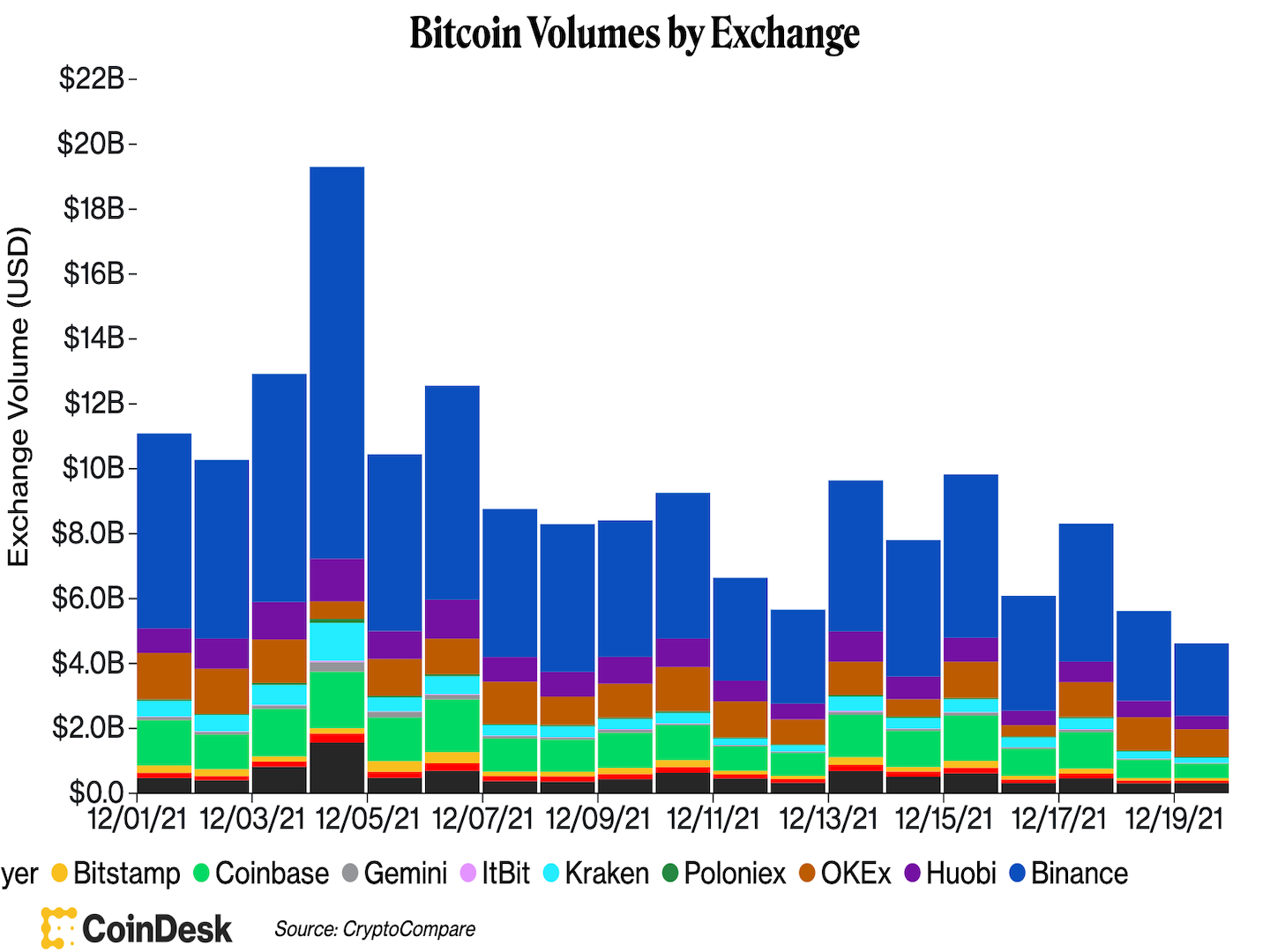
It was a relatively quiet weekend in cryptoland, with bitcoin and ether prices remaining stable over the weekend after the official decision from the Fed to end their pandemic-era bond purchases in early 2022. Across major centralized exchanges, bitcoin's trading volume was low heading into the holiday season in the U.S. Additional thread here for a view on current market dynamics.
Prices (as of Sunday 7:55pm ET):
Bitcoin: $46,694.20
Ether: $3,928.19
2. Polkadot Parachains Go Live, Capping Yearslong Tech Build for Ambitious Blockchain Project
The first five parachains on the Polkadot blockchain are now live. Polkadot itself is a protocol that "hosts" other blockchains in an effort to create seamless cross-chain interoperability. Parachain functionality on the Polkadot network has been in development for the past five years and will allow other blockchains to run in parallel on Polkadot and remain connected to one another via the Polkadot Relay Chain, which can also bridge to other blockchains like Bitcoin and Ethereum. The first five parachains going live are Acala, Moonbeam, Parallel Finance, Astar, and Clover. Each parachain will have a 96 week lease to a slot on the Polkadot Relay Chain, and Polkadot expects to eventually be able to support 100 parachains.
3. Thread from @CaitlinLong on BTC price, paper claims, and risks
Caitlin Long, founder and CEO of Avanti Bank, puts together an interesting argument on the impact paper claims have on the bitcoin market as well the risks they pose to the broader financial system. It's worth the full read.
Takeaways:
- What is "paper bitcoin"? From Caitling: "A promise by an intermediary, such as an exchange, to deliver real bitcoin. Unless you hold the private keys, you don't own bitcoin--what you own is a CLAIM to bitcoin (an IOU). Does your intermediary own [enough] on-chain bitcoin to make good on all such claims???"
- "Paper bitcoin" is functioning as "fake supply" that is satisfying real demand, and if supply increase while holding demand constant, prices goes down.
- "Fake supply" also causes demand for real bitcoin to drop, which of course also pushes prices downward.
- Very few disclosures (e.g., actual coins held) are required from crypto intermediaries in today's market.
- More paper claims on bitcoin exist than actual bitcoin, and ~90% of bitcoin is held in the hands of the private sector versus intermediaries, unlike typical commodity markets (e.g., gold) where intermediaries control a large portion of the supply.
- A run on an intermediary's bitcoin could quickly take them down and/or drive the price temporarily to "no-offer".
1/ I DIDN'T SEE SOMETHING UNTIL NOW. Often I've spoken about paper assets creating a fake supply that satisfies real demand, & that (all else equal) this causes an asset's price to fall. Most recently this came up in a debate with @timevalueofbtc abt using #MVRV to value #bitcoin
— Caitlin Long 🔑⚡️🟠 (@CaitlinLong_) December 18, 2021
4. The U.S. government has a massive, secret stockpile of bitcoin — Here’s what happens to it
For several years now, the U.S. government has been auctioning off bitcoin and other cryptocurrencies seized as part of raids on criminal operations. Why the government hasn't HODL'd is not clear, but they have missed out on very sizeable returns. A prime example being the sale of 30,000 bitcoin in 2014 for $19 million that would be worth approximately $1.3 billion today. Rapid growth in crypto seizures has forced the U.S. Marshals to hire Anchorage Digital in order to custody the seized assets. “In fiscal year 2019, we had about $700,000 worth of crypto seizures. In 2020, it was up to $137 million. And so far in 2021, we’re at $1.2 billion,” Jarod Koopman director of the Internal Revenue Service’s cybercrime unit told CNBC.
5. U.S. Regulators Raise Concern With Stablecoin Digital Currency
The Financial Stability Oversight Council said they are prepared to take action to regulate stablecoins and addressed the risks posed to the traditional financial system. The Council's report, issued Friday, said that stablecoins are “an important potential emerging vulnerability,” and that “if stablecoins are marketed with the claim that they will maintain a stable value, they may be subject to widespread redemptions and asset liquidations if investors doubt the credibility of that claim.” The Council has indicated that they would prefer Congress to act first, but that they will take steps to regulate the industry if Congressional action is absent.
Top Sharers of the Crypto Top 5:
1. Cameron S. - New York, NY
2. Jake Y. - Greenville, SC
3. Lauren A. - Nashville, TN
Disclaimer: The information contained in this newsletter shall not be understood or construed as financial advice. I am not an attorney, accountant or financial advisor, nor am I holding myself out to be, and the information provided is not a substitute for financial advice from a professional who is aware of the facts and circumstances of your individual situation.